Customer Success Story

Order fulfillment automation: how Latcham handles nearly 4x the orders with the same team

How a 30-year-old Bristol print and fulfillment business turned a two-week NHS order process into 24 hours, without adding a single member of staff.
Latcham Logo overlaying packaging warehouse

The business

A two-week process cut to under a day, without hiring a single extra person to make it happen. Here’s the business behind it and what it took to get there.


Latcham is a Bristol-based print and fulfillment business with nearly 30 years of experience. They serve clients across healthcare, retail, and the public sector, running a complex operation that blends print production, pick-and-pack fulfillment, and managed order workflows for enterprise customers.


Juergen May, who heads up their web-to-print and digital operations, has spent three decades in the industry. He came to Infigo after a 15-year relationship with a previous platform, Four51, that was sunset after acquisition. With their incumbent system running out of time, Latcham needed a replacement. What they found wasn’t just a storefront replacement, it was a system to create more value for their customers.

Juergen May - Latcham - Headshot

The trigger

Four51 had served Latcham well, but it had not kept pace. Templating was limited. Integration depth was thin. The gap between what Latcham could produce operationally and what their customers could order digitally was widening, and the platform’s sunset date made the decision unavoidable.


Juergen didn’t move straight to a replacement. He shopped around before jumping into a new solution. But it was only after that search, at an industry event where Infigo’s founder, Douglas Gibson, gave a live demo, that the decision became obvious.

“I did a lot of shopping around, all the usual suspects in the market. Infigo were just on a whole other level to what I’d seen from the competitors.”
Juergen May Digital Solutions Manager, Latcham

It was not a feature walkthrough that won him over. It was the realization that Infigo could solve problems his previous platform had never been able to touch.


Immediately after that demo, Juergen approached the Infigo team. We were surprised by the immediate impact of the demo. That kind of urgency at events is unusual. But for Juergen, the decision was straightforward: he had seen a platform that could do what he needed, and more than he had thought to ask for.

“I wasn’t only looking to support print. I was thinking hang on, I’ve got this NHS project. Is this going to help with that? And I realised, oh my God, yes.”
Juergen May Digital Solutions Manager, Latcham

The problem being solved

Latcham’s NHS (the UK’s National Health Service) test kit operation is the clearest illustration of what was at stake. They manage fulfillment of FIT test kits for GP surgeries (the UK’s equivalent of a doctor’s office) as part of the NHS’s symptomatic pathway, for patients already showing possible signs of bowel cancer, not the separate population screening program. That distinction matters: delays in the symptomatic pathway carry a more immediate clinical consequence than delays in routine screening.


Before Infigo, the process looked like this: a GP surgery would place an order, which would pass through four layers of NHS administration before Latcham could act on it. From order placement to delivery, the turnaround was two weeks.


The bottlenecks were human. If the person responsible for keying orders into the production system was in a meeting, or batching their inputs, the job sat waiting. Dispatch staff could be idle while the queue built up elsewhere. The process had no automation, no integration between order intake and production, and no way to compress the timeline without adding headcount.

BEFORE INFIGO

  1. 01

    GP surgery places an order

    Orders reach Latcham by way of the NHS, not directly.

  2. 02

    Four layers of NHS administration

    Each one before Latcham could act on the order.

  3. 03

    Orders keyed in by hand

    Batched inputs, and jobs waiting whenever the person keying them was busy.

  4. 04

    Delivery: two weeks later

    From order placement to the kit arriving at the surgery.

What changed

Juergen doesn’t describe Infigo as web-to-print software. He describes it as a centralized order portal, a productivity tool built to let someone complete a task as quickly and easily as possible.


That framing shows up in the product decisions Latcham made. Starting with cutting the checkout process down to almost nothing.

“On a B2B site we’re not looking for customers to browse and spend as much time on there as possible. We’re not after the extended dwell time you’d want on a B2C site. Realistically for our customers, this tool competes with sending an email, so it needs to be easier and quicker than that, which Infigo absolutely does.”
Juergen May Digital Solutions Manager, Latcham

With Infigo, the NHS order flow was rebuilt end to end. GP surgeries now log in, select what they need, and place an order in seconds, skipping the basket and a lengthy checkout altogether. Infigo’s flexibility allowed Latcham to strip the UX down to exactly what’s necessary. The order flows directly into Latcham’s production system without manual intervention. The record order to fulfillment time that Juergen shared with us:

1:53 minutes
From a GP surgery’s order to a packed box with the shipping label on
“The fastest I’ve seen, from the customer placing the order in the GP, to us having the physical box packed and ready to ship with the shipping label on, is 1 minute 53 seconds.”
Juergen May Digital Solutions Manager, Latcham

Running around the clock

Two weeks to under two minutes to process. Orders placed before 2pm ship same day on a next-day delivery service, which is what turns that processing speed into a 24-hour delivery figure. Zero headcount added. The automation runs around the clock, whether Latcham’s fulfillment team is at their desks or not, orders placed the previous evening are ready to go the moment the team arrives at 6am.

Tracking without the support calls

The platform also routes real-time tracking data back to the customer automatically. Instead of chasing Latcham for updates, GP surgery administrators can log in and see order status, tracking numbers, and delivery information without a single support call.

A dashboard they live in

This impact became apparent when a dashboard went briefly offline during maintenance. Within a minute, Latcham’s NHS contact was on the phone.

It turned out one administrator had a monitor dedicated permanently to the Infigo dashboard. Monitoring stock levels across a dozen storefronts, tracking order patterns, planning procurement six weeks ahead to account for international supply chains.

“No print involved. But the ease of use, the connected workflow, and the insights from the data mean they tell us they live in the dashboard. They’re planning in advance based on live usage.”
Juergen May Digital Solutions Manager, Latcham
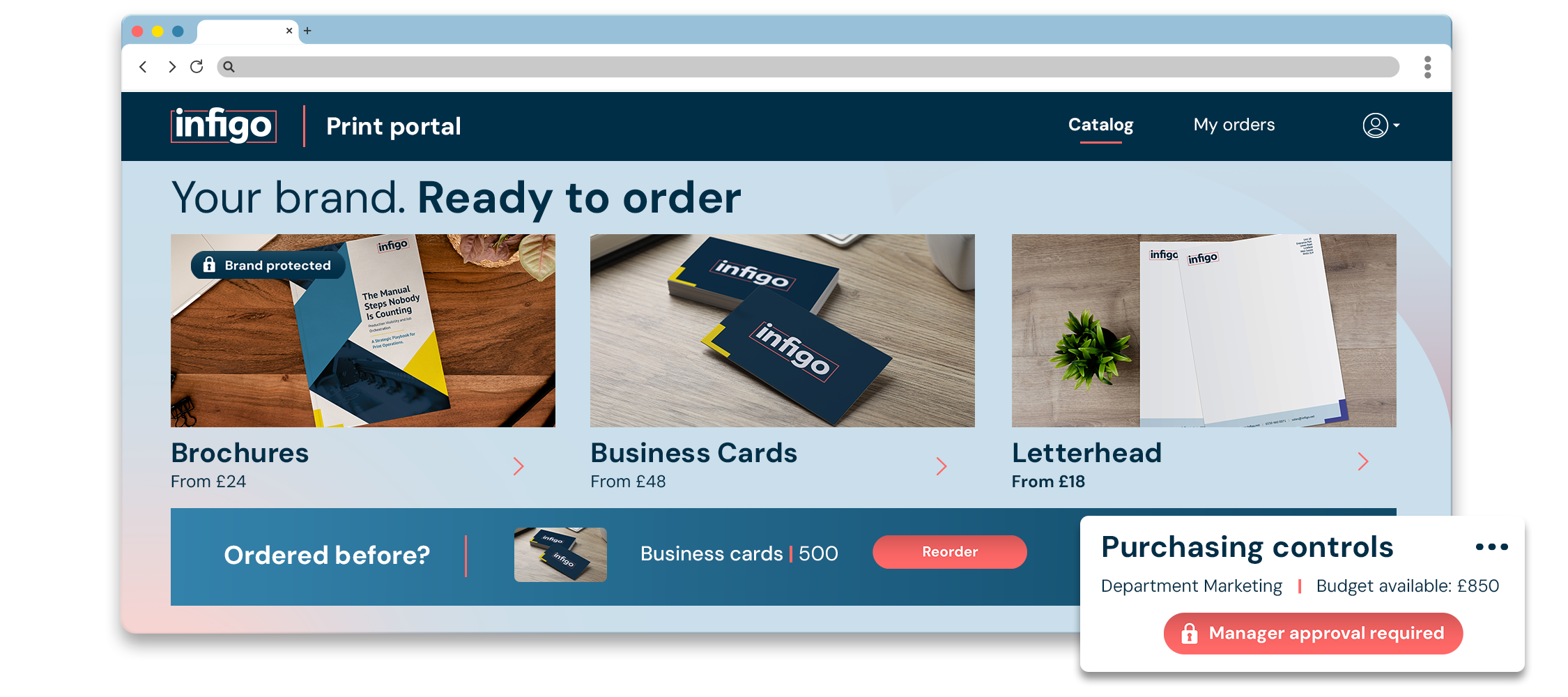
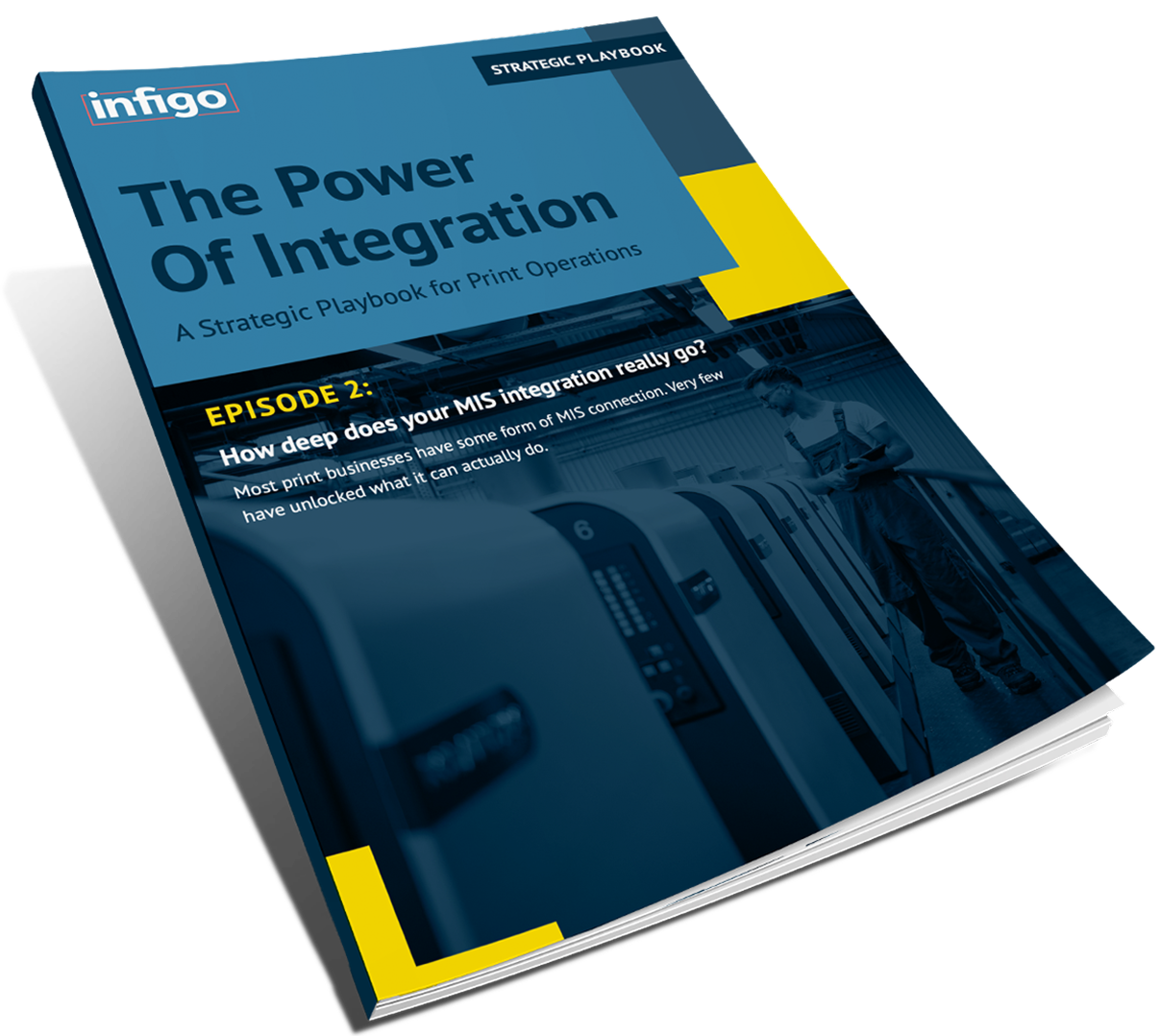
MIS Playbook

How much is manual order entry costing you?

Latcham replaced manual order keying with orders that flow straight into production, and cut NHS test kit turnaround from two weeks to under 24 hours. Our free guide shows how print businesses close that same gap between web-to-print and MIS, and what it’s worth per order, per week and per year.
MIS Playbook

Beyond print

Juergen shared that a large portion of their orders through the Infigo platform isn’t even print.
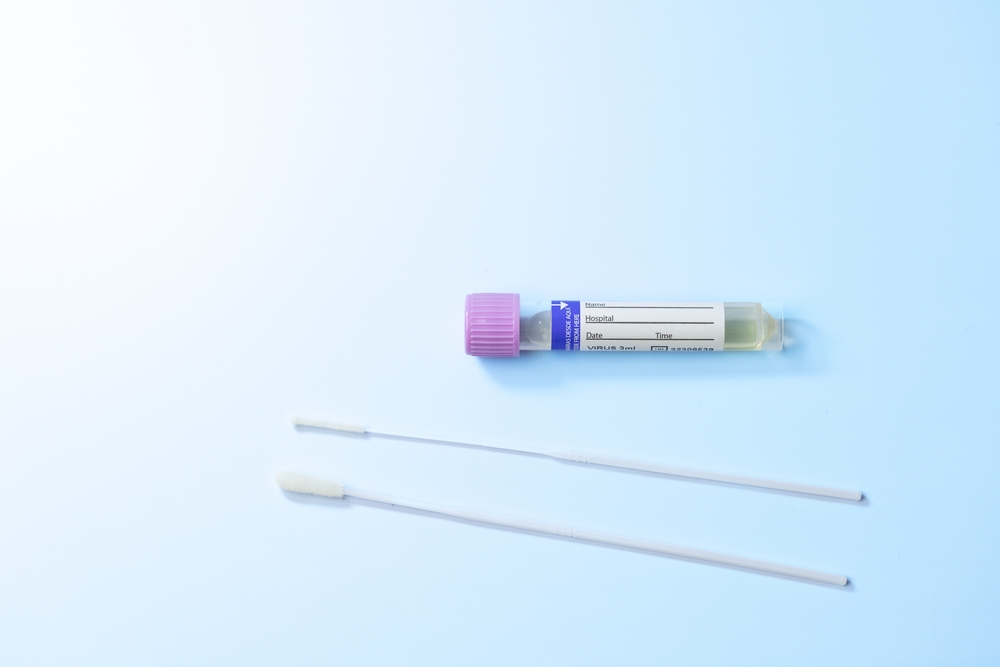
The NHS test kits, swabs, test tubes, physical components assembled on-site, are entirely non-print fulfillment. Latcham sources components, assembles kits, and dispatches them under Infigo’s order management. The platform was never positioned as a print-only tool, and for Latcham, that flexibility is core to its value.
90%
“A lot of what we see today, 90% of it doesn’t involve print. Yes, it says web-to-print software on the tin, but it does so much more than that.”
Juergen May Digital Solutions Manager, Latcham
This is the Infigo capability that most print-sector vendors never surface: the platform’s order flow architecture is configurable enough to support any fulfillment operation, not just print. For Latcham, it opened a client relationship that would have been operationally impossible to service at scale without it.
A healthcare test kit on a light blue background
“There’s no print in that. These are test kits. These are physical test tubes and whatnot that we assemble here. And it’s been brilliant.”
Juergen May Digital Solutions Manager, Latcham

Operational impact across the business

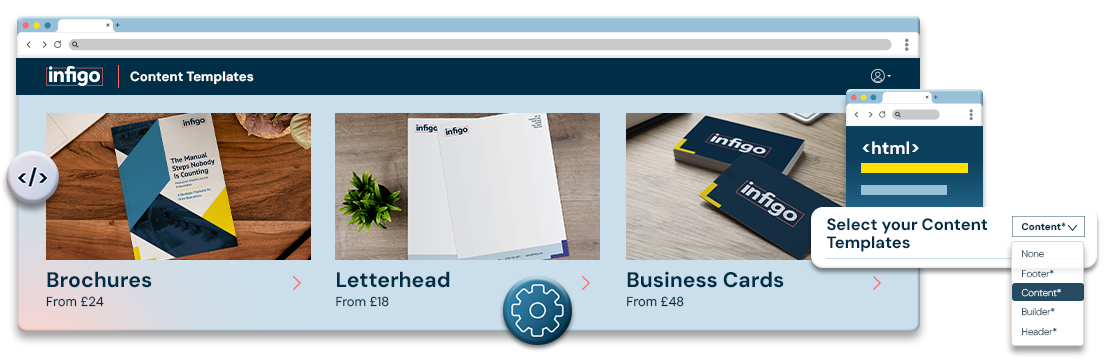
The NHS workflow is the most dramatic example, but the operational gains run throughout Latcham's business. Storefront build time dropped from four hours to around 40 minutes. A saving that compounds across every new client onboarding. That improvement is the product of Content Templates, a shared CSS override file, and Editable Content. Functionality specific enough that the build process could be handed over from developers to Latcham's client services team entirely. The integration layer handles data mapping as a one-time project; after that, orders flow without manual intervention and without the team needing to understand the underlying data architecture.

Before Infigo
After Infigo

NHS orders: 2-week turnaround, 4 admin layers

NHS orders: under 24 hours, fully automated

Order data batched and manually keyed

Orders flow direct to production at any hour

Storefront builds: 4 hours minimum

Storefront builds: ~40 minutes

Dispatch team idle while orders queued

Dispatch team processes from 6am, no queues

Customer calls required for order status

Customers self-serve tracking, zero support calls
A partnership built on access

Part of what distinguishes Latcham’s operation is a structural quirk. Juergen isn’t a project manager relaying GP surgery requirements to a separate dev team, he’s the developer. He’s the one talking to customers directly. There’s no translation layer between what a customer needs and what gets built, which is why Latcham can move from request to working solution faster than a more conventional handoff between account management and engineering would allow.


That access is also why Latcham chooses to keep Infigo visible to its own customers rather than white-labeling the platform.


For a business built on long-standing enterprise relationships, that’s a deliberate signal: the technology behind the service is not something to obscure, but something to stand behind.

“We get our developers close to our customers. I don’t think a lot of businesses in our space do that. This connects customer needs with possibilities.”
Juergen May Digital Solutions Manager, Latcham


“We don’t want to white-label. We are proud of our partnership and want our customers to know. It’s as if white-labelling would be not truthful.”
Juergen May Digital Solutions Manager, Latcham

Built for every skill level, not just the technical team

A recurring objection from operations leaders considering a platform switch is staff adoption. Will non-technical teams actually be able to use it? For Latcham, the answer isn’t a policy or a training program. It’s a specific piece of platform architecture: Content Templates.


As a developer, Juergen can build the logic for how something appears on screen, then expose just the handful of fields a colleague actually needs to change. The result is a layer of simple, purpose-built tools sitting on top of Infigo’s full capability, built by a technical person, used by people who’ve never touched code.

“It allows people like myself to build simple tools for my colleagues to build the storefronts… they don’t need to know anything about HTML, they don’t need to know anything about CSS. All they need to know is how to choose something from a menu, and then how to populate the fields with the information it’s asking for.”
Juergen May Digital Solutions Manager, Latcham
Infigo Content Templates removing the need of HTML page building

A healthcare product page is a working example:

01
a colleague adds a component table,
02
types in a product code and description,
03
and adds another row for the next item.

No code, no template file, just a dropdown and a couple of fields.

Juergen didn’t set out looking for this. He learned Infigo on the job, building Latcham’s Royal College of Midwives storefront, picking up only what that project required. Content Templates weren’t on his radar until months later, and when he found them, the effect was immediate.

“That was a game changer. Because that’s when I realised, hang on, I don’t need to be the one to do all the storefront builds. If I create the building blocks for my colleagues, I’m going to show them how it works. Job done.”
Juergen May Digital Solutions Manager, Latcham

The proof is in who’s doing the work today. Three non-technical members of Latcham’s client services team now build and maintain storefronts independently and one of them deploys every new NHS storefront Latcham brings live.

Now not every business has a Juergen in house to do the build, Infigo’s professional services team can play that part for any operation looking to streamline their site and product builds.

Getting up to speed: the Academy

Capability like this only pays off if a customer can actually learn it, and if the vendor can absorb the friction while they do. For Juergen, that came down to two things: the Infigo Academy, and the technical support team behind it.


He’s equally candid that it wasn’t frictionless from day one.

“Without the Academy there’s just no way I could have got up to speed as quickly as I did, and the support from the Tech Support team was phenomenal.”
Juergen May Digital Solutions Manager, Latcham
“There was definitely some friction in those first few months as I started to challenge certain aspects of Infigo, but that soon developed into a strong relationship between us.”
Juergen May Digital Solutions Manager, Latcham

Scalability without headcount

When asked what would happen if Infigo became unavailable, Juergen’s answer was immediate: “Huge. Not just for the here and now, but for the future, because the process I’ve just described is scalable.”


Latcham could handle ten times their current order volume on the same infrastructure. The platform scales; the headcount does not have to. Without the automation layer, every jump in volume would require a corresponding jump in staff. With it, growth absorbs into the system.


That scalability also extends to client onboarding. What previously took days of technical work now takes hours. Latcham can take on new enterprise clients, configure their environments, and have them live without the weeks of setup that constrained their capacity before.

10x
Current order volume Latcham could handle on the same infrastructure
Days → hours
Technical work to onboard a new client

The commercial outcome

Speed and automation are only half the story. The other half is what they’ve made possible commercially, and this is the part most workflow case studies never quantify.

Where they want to go next

Latcham’s ambition is to close the remaining gap between Infigo and their wider operational infrastructure. Two priorities stand out.

About Latcham

Latcham is a Bristol-based print and fulfillment business with nearly 30 years of experience, serving clients across healthcare, retail, and the public sector. Their operations span print production, pick-and-pack fulfillment, and managed order workflows, including NHS test kit assembly and dispatch.

About Infigo

Infigo provides web-to-print for print businesses that have outgrown a basic ordering tool. It connects storefronts, prepress and production so orders move with minimal manual handling.

Trusted by print businesses across commercial print, packaging, labels and wide format, Infigo connects your online ordering experience directly to your production workflow so orders flow from customer to press with minimal human intervention.

Key takeaways for B2B print leaders

Two weeks, down to under 24 hours

NHS test kit orders skip the basket and flow straight into production with no manual keying. Orders placed before 2pm ship the same day on a next-day delivery service.

4 hours, down to around 40 minutes

Content Templates moved storefront builds from developers to three non-technical client services staff, who now build and maintain storefronts independently.

90% of orders involve no print

Juergen May’s estimate of what Latcham sees through the platform today, including the assembly and dispatch of NHS test kits under Infigo’s order management.

345 to 1,321 orders, no added headcount

Storefront orders nearly quadrupled between 2024 and 2025, and Juergen says Latcham could handle ten times the volume without investing in more resources.

FAQ'S

Frequently Asked Questions

Didn't find the answer?

No worries! If you have any other questions or need more information, feel free to reach out directly. We’re always happy to help and make sure you feel confident. Let’s chat!

Book a demo
  1. Latcham ran on Four51 for 15 years. When Four51 was sunset after its acquisition, Latcham needed a replacement. Juergen May shopped around the market, then saw a live demo from Infigo founder Doug Gibson at an industry event and approached the Infigo team straight afterward.

  2. GP surgeries now log in, pick what they need and order in seconds, skipping the basket and a lengthy checkout. Orders flow straight into Latcham’s production system with no manual keying, replacing four layers of NHS administration. Orders placed before 2pm ship the same day on a next-day delivery service.

  3. Yes. Latcham sources components, assembles NHS test kits, including swabs and test tubes, and dispatches them under Infigo’s order management. Juergen May estimates 90% of what Latcham sees through the platform today involves no print, because the order flow can be configured for any fulfillment operation.

  4. Through Content Templates. Juergen May builds the logic once and exposes only the fields a colleague needs, so they choose from a menu and fill in fields without touching HTML or CSS. Three client services staff now build storefronts, and a build takes around 40 minutes instead of four hours.

  5. Juergen May learned Infigo on the job while building Latcham’s Royal College of Midwives storefront, using the Infigo Academy and Infigo’s tech support team. He describes some friction in the first few months as he challenged parts of the platform, which developed into a strong working relationship.

See what Infigo can do for your business

Ready to cut a two-week process to under 24 hours?

See how Latcham cut a two-week NHS process to under 24 hours, in a tailored 1-to-1 demo.

Person working on laptop and notebook

Prefer to Explore First?

Watch the Platform Walkthrough